
Category: Article Posts
Physics Series Volume 1: Distance, Acceleration and Lifting Heavy Stuff
This series is designed to let people know about simple ways that physics affects their workout world and some simple concepts they can use to modify workouts or possibly even make them more effective and safer at the same time. Yes, I admit I am in full nerd mode here but this is just how I get through the day.


As trainers we talk a lot about tempo – or at least some of us do. Some trainers think a tempo is an old type of car. It is defined as “the rate or speed of motion or activity”. To break this down further, it means velocity, and since in the fitness world velocity has a distance vector with something attached to it we can talk about acceleration.
Fundamentally this affects the amount of force your body provides onto a movement or therefore into a joint or series of joints.
What I want you to think about is the concept that the faster you want to do something, the more force is needed to move it taking into consideration the mass in question. At that point, the actual weight involved can be part of the movement, but does not have to represent the entire situation. For example, if you are bench pressing lying on your back and you lower the bar twice as fast with downward acceleration, the force required to reverse that acceleration and push the bar back in the other direction is possibly twice as much.
One of the fundamental theories in physics is that Force = Mass * Acceleration. Acceleration is simply the change in velocity over the change in time. This means, if I lift something at a rate of 1 meter per second, and take 1 second to do it, then the total acceleration is 1 meter per second per second, or in physics notation 1m/s2. Say my mass is 100 pounds, then my total force is equal to 100. However, how does this change suddenly if I decided to lift it faster? Well, all of a sudden things change.
If I take the same weight and lift it at a rate of 2 meters/second over the same amount of time (1 second), then my acceleration is now 2m/s2. What this means fundamentally is that I have potentially doubled the amount of force required for the joints performing the movement by performing the exact same movement faster. So imagine if you will the impact on your body if you suddenly took the same amount of weight you were used to – and then doubled it. Your joints might not be able to handle the strain and torque you were putting them under and your risk of injury would increase drastically.
The factors involved here are distance travelled, the amount of mass involved (in our world we’ll take this as the amount of resistance) and also the velocity at which it is lifted. A practical example can also be for that poor guy with the really long arms who wants to be a powerlifter. He is certainly at a major disadvantage. Why? Because if he lifts a bench press bar up to his full arm extension he may have to move it many inches more than a really big guy who has relatively short arms. In fact, the distance travelled may be as much as 50% greater. This is part of the reason that powerlifters arch their backs so much, along with the fact that pushing from a decline position makes it easier to lift the weight.
Never mind the factors of muscle surface area and torque created around his major joints, he is all of sudden, if you take velocity and time into account he has to generate more force in order to move the same weight. Also, there are other things to consider like his grip on the bar and the distance it travels from his shoulder. However, if we do some quick math you will find that there are some astonishing things going on. There is a reason why most successful power lifters are big thick people with really solid technique.
For our situation, I’m going to take a guy lifting a bar .30 meters from chest to full extension, and another guy lifting something .20 meters due to arm length. They take the same amount of time to complete the lift (1 second). The mass involved is 100 of whatever unit you prefer. The first person has to generate a force of 30 in order to lift the weight. The second person only has to generate a force of 20 – or one third LESS force (according to physics) in order to move the same weight over the same amount of time, purely due to distance travelled. So the next time you see the guy with long arms pushing far less weight on a bench press, don’t be so quick to judge – he may actually be pushing far more weight in force terms than the big bulky guy beside him.
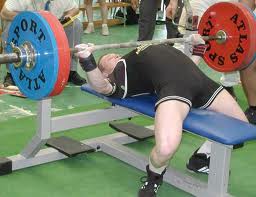
So an easy way to apply this in the gym while mixing it up is to simply try to accelerate the same weight you have previously been using – but faster. If you normally take two seconds to lift an object, try to do it in half of the time. Your joints will take on more force even though you haven’t actually changed the mass in question. It is a very simple way to change things, but can really be effective.
Please feel free to like, comment and critique this post and let me know what else you would like to hear about. Until then, rethink exercise!
Choices and Consequences
This week Lance Armstrong will go on television and finally admit that he used performance enhancing drugs in order to win cycling races. This is nothing new to most of us who already have known for a long time that he doped and most other professional cyclists did as well. He just did it better. In Tyler Hamilton’s recent book he basically explains that to make it in the sport it was totally necessary, and I understand that. If you’re in a situation where it is either cheat and excel or stay clean and not place, it is human nature to want the reward. I was in that position myself years ago and decided to go one way, but often wonder about what might have happened if I went to the other. If you think that your professional athletes in whatever major sport you follow haven’t done something technically illegal at some point, I’d wager a lot of money that you’re wrong.
In the Fitness industry, competitors in bodybuilding and fitness competitions take drugs as well. In fact, it is pretty rare to find any competitors at the top end of the sport that haven’t done it at least one cycle or take things regularly when they are finishing show prep, even though many of them will protest to the end that they are “natural” just like Lance did for years. I have one colleague who at least comes out and admits about his drug taking and makes sure that he only competes in non-natural shows, and there is even a whole major federation out there that basically says everyone is doing it so they just turn a blind eye and don’t bother testing. There are ways around any drug tests and it is remarkably easy to do so. As a new competitor the temptation to just do it is huge, especially when coaches and trainers encourage it and will readily find it for you because it means you will get better results (which for some reason is their doing, not the drugs).
Many people don’t think about the long term effects of these things. The body is only meant to be pushed so far, and when unnatural means are used to push it further then it usually fights back. It isn’t unusual to see former athletes a shell of themselves a decade after they retired with a host of major health issues. So athletes need to ask themselves if it is worth possibly dying ten to twenty years earlier because they decided to excel for a couple of years. If there is huge money involved, like in Lance Armstrong’s case then most people would say no question. But for that bodybuilder or fitness model, the only thing they are going to get is a trophy, maybe some nice pictures and a line on a resume. It almost doesn’t seem worth it, but for many people it definitely is, even if they only win one show or achieve a “pro card”.
So then we come down to the moral question. Is it really cheating if everyone is doing it, it seems to be tolerated by the vast majority of an industry and they are only going to condemn you if you get caught? The temptation is experienced by athletes in all sports, and starts as early as high school for many teenagers. Many out there would say cheating is cheating – it doesn’t matter if everyone else is doing it or it is almost required as it is with most professional sports to achieve that level. But for anyone who has reached for that brass ring and just barely missed, having the chance to have that big moment of victory is usually too much to bear and they will do anything to get it again. Our society rewards the winners, not the participants. So it is perfectly natural for us to say “everyone is doing it, so why don’t I?” It is human nature to want the satisfaction without considering the long term consequences. We see this in marriages with affairs, workplaces with stealing and things like starvation diets and medical weight loss programs.
I have no problem with Lance taking drugs. He did what was necessary and I’m not condemning that. If he had been the only one doing it then the story might change, but he basically had a level playing field and beat everyone anyway. He trained very hard and busted his butt, just like many people do in my industry. However, the penalty is now catching up with him. What people have to ask themselves now is whether it is even worth it to level the playing field for what you want to do? Be aware that if you are going to take the risk, you have to expect that at some point you’re going to have to deal with the consequences, which often come well after the reward has been and gone. There are examples of that all around me and to this day I look back and know that I made the right choice – for myself. I hope that you decide to as well and live well with whatever choice that you make. 
Thinking Outside of the Exercise You See
So today during a workout I had just started squatting. I’m not going to get into the details of my current program, but an easy way to sum it up is to say that I’m trying to subject all of my major joints to lots of range of motion in various directions with loads I can easily handle in order to increase mobility so that when I switch to a different form of training they are more able to handle higher levels of force across them.
A trainer at the gym I work out at came up and watched a set, then commented that I had a lot of pelvic tilt and pressure on my lower back and that he wanted to show me something. My first comment was “yes, I know – that’s on purpose.” From the expression on his face I could tell he was curious. He asked what I was doing the squats for. I said “my knees” (and ankles and hips and back etcetera but I’m not going to explain all of that). Okay, he said – but if you go narrower you will engage more of your quads. I told him that I didn’t say my quads – I said my knees.
There are 12 muscles that cross over that joint alone, never mind the many dozens that assist in the movement through the hips, back and foot and ankle. I also said that I was intentionally letting my pelvis roll, which I think was a little bit outside of the proverbial box. Take it as a piece of advice – never assume that you know exactly what the person is trying to do and that what they are doing is “wrong”. You might think it is, but wrong is defined on many different levels. It is based on the individual. If I was doing a shoulder press to help my knee, that’s probably wrong. But moving my legs into ranges they aren’t used to under load in order to help them learn to generate tension through ranges they aren’t used to – that’s not wrong. For what I want, it is very, very right.
Now, this guy definitely had the best of intentions (I know that) and thought that from what he has learned over his years of bodybuilding and weekend courses that he was right. And he was – if we were talking about what he thought we were talking about. The first instinct is to immediately make him feel like an idiot, but he’s not. He just hasn’t seen the side of movements that I have or knows what I know. And at his stage of development as a trainer admittedly I didn’t know those things either. But what I ask people to do on a daily basis when it comes to their body is to really think beyond simply things like quad contraction and go a little bit deeper. So maybe people can learn more about what is really going on within the body when we subject it to force by doing things like squatting so my butt touches the ground and my hamstrings touch my calves with a load on my back.
If I wanted this article to be ten pages long I could break down exactly what happens when you squat with load, through what joints and how fast and with what ranges depending on what goals but that’s not the point. Part of my RTS training is really thinking outside of the movement and being able to either go in like a microscope, or come way out into a much broader view so that no matter who you are dealing with you can not only show them something that is appropriate for them and gives them a good experience, but also maybe teach them a bit (as much as they want to know) about words like “good” and “bad” and what they actually mean. Even words like “better” and “worse” have so many variables they are really hard to define. Better for what? For who? Better how? Where is the magic dividing line that makes better into worse? That makes good into bad? These are all questions that I constantly am searching for the answers to, but the fundamental truth is that there isn’t any one answer. The answer, like I tell people so many times on a regular basis is IT DEPENDS.
When you see someone squatting, you think that it is to get stronger legs. When you realize how many other things are involved in that chain of movement you might realize that by squatting, I can actually make my back stronger. Or my ankles. By changing the tempo or by pushing differently I can affect changes in strange ways as well. By putting the bar on my back instead of my front – the movement changes. Let’s all try hard to think outside of the exercise and consider everything that might be going on with a movement before we judge it.
So to all of the trainers and regular people out there in the gym, let us try really hard the next time that you see someone doing an exercise and you think that it’s “wrong” – maybe ask them why they are doing it. Then ask more questions. And more. You might just learn something.
Do you actually eat Real Food?
One of the more disturbing trends I have seen recently in the fitness world is the incredible over consumption of supplements. As fitness people we hear trainers talk all of the time about the importance of proper nutrition in order to reach your fitness goals, but more often than not I still see people (mostly trainers and other fitness people just because that’s who I see all day) amping ourselves up with energy drinks, protein in the form of powder and sugar and various other types of concoctions that are supposed to help us get to our goals faster somehow.
You can’t open a magazine without hearing that one powder is infinitely more superior than another. You have probably been approached recently by various people who claim that Vi Shakes, Herbalife, NutriSystem or Isagenix are the most amazing weight loss thing on the market right now. The funny thing is that as our society degrades our food supply even further, the very people who are supposed to be keeping your health in mind are usually the ones telling you that it is okay to use these products (and imagine that, you can purchase them right off of your “trainer” too!).
When my clients ask me what they should eat, it is a pretty simple answer: FOOD. One of the best ways I ever heard it put during one of my nutrition courses was pretty simple – stuff that used to be alive in some way. Did it come from the ground? Was it born and raised somehow? Did it breathe, provide oxygen or develop without being manufactured in a facility? Let’s start there, shall we? Last I checked, that protein powder wasn’t actually made from ground up chicken or cow. The casein or whey inside it didn’t come from milk that was actually taken out of an animal. Even my wife’s protein powder, which is vegetarian and GMO and soy free mostly gets it’s protein from Yellow Pea Protein Isolate, but I doubt if they actually ground up the yellow peas in a factory.
I read blogs time to time from various fitness competitors and bodybuilders, and most of the time when they eat a real meal they can’t help but brag about it like it is some magical thing and post pictures of it on the internet. Or they post about how amazing their supplement shakes taste (this post sponsored by Nutrabolics!) or how amazing these things make them feel, without a second thought as to the chemical crap storm these things might be creating within their body long term. Many “diets” that are posted by fitness competitors online always contain at least 2 or 3 protein shakes and other things supposedly designed to increase results. Why couldn’t a competitor just eat a chicken breast instead? Oh, your coach doesn’t sell chicken? Whoops.
The fundamental truth is that if someone can make a profit off of selling people some product, whether it is good for them or not then they are going to do so, but I call this a severe lack of integrity as a fitness professional. Then there are the people who take these things all of the time claiming that they have to due to time constraints or the fact they are “too busy”. I always call BS on this because basically what it comes down to is poor time management skills. I can create a healthy meal with stuff from my cupboards in 10-15 minutes that has all the major macronutrients (and often do when I get home). If you have no time, then you simply aren’t managing it very well. I’ll admit that time management is crucial for this type of thing, but putting eight chicken breasts in the oven instead of 1 just makes sense because then you have no excuse. We use our slow cooker to make 3 days worth of meals at once and they are generally pretty healthy and easy.
If you’re driving around and get hungry, there is no need to stop at a drive through when grocery stores are now open 24 hours and are everywhere. God forbid you actually have to get out of your car and walk into the store and take 10 minutes to buy something. It doesn’t have to be expensive either. Buy enough things to last you the day, not just a meal. Keep non-perishable food in your car or office (there are lots of easy ways to do this). It amazes me when people would rather go out and spend $30 at a restaurant at one meal when you can buy two days worth of groceries for the same amount, and these are the same people who say, “I can’t afford to eat healthy”. Well, you also can’t afford to eat lazy. There’s a reason your body isn’t very happy, and it’s probably because it is sick and tired of the crap you are putting into it.
Even if you can’t do this all of the time, please make sure that you do it more often than not. The word “supplement” means just that – something intended to provide nutrients that may be missing or not consumed in sufficient quantities in a persons’ diet. The main issue there being the diet itself. There is no reason beyond allergies that you shouldn’t be able to eat the things that you need to when you really get down to it. In the fish world alone there are about 50 different choices. If your body doesn’t like it then it will tell you and then you just need to find something else. But you do have to plan ahead.
So lets as a group start a new trend within the fitness world and beyond. Ready? Instead of reaching for a shake, eat something real. Fuel your body with things that are designed by nature to provide energy, not get it in a chemical shot. Stop buying things because it is more convenient or because you had some unethical idiot convince you that it is good for you. Try it just for two weeks and see if your body responds in a positive way. I’m pretty sure that it will and you will notice a huge difference. Feel free to let me know what you think!
 Therapy and Exercise Refined