
Category: General Information
Taking Care of the Baby
As many of you know, I had a beautiful baby girl four months ago. What many of you also can probably relate to is the total chaos that your life becomes when a new life that is totally dependent on you enters it. Now that the smoke has cleared a bit, there are some serious lessons I have learned so far. It is amazing how many of these things also apply to those of you who are trying to make fitness and health a regular part of your life so I thought I would outline them and give some tips for managing things when it seems like absolutely nothing is manageable:
- Prioritizing is essential.
I’m very lucky that I make my own hours and can (sort of) control my own schedule. When you’re dealing with your child, they are obviously going to take precedence over most other things (sometimes everything). Too many people in my experience put fitness and health too low on their priority radar when it should be much higher. If you aren’t healthy, you can’t take care of yourself or your family. If you have no energy, you can’t jump out of bed on those nights when the baby cries at 2am. If you have a bad back or bad knees, you can’t hold/pick up your kids or the mountains of bags they generate. After holding an infant for hours in a Baby Bjorn even my back was killing me, which was a sign that I needed to start working on my lower back strength a bit more. You might have areas that need the same thing.
- Think about the long term, don’t obsess about the short term
Any good fitness and health program is a period of months, if not years – and should really be a permanent part of your life, just like your new little one. Development and progress can be drawn out over a period of time. Ask my wife after our little one just got through her first two baby teeth! Children develop at their own pace and can be encouraged but not forced, just like your body. Give everything time to settle into place and develop at whatever pace works best. Set goals that stretch over months and seasons, not a “90 day challenge” where at the end you go back to doing whatever you were doing before. Check back with yourself in a year and you might be pleasantly surprised.
- Patience is a virtue and remain calm
Not everything is going to go smoothly. Your routine might suddenly get thrown completely out of whack when changes occur. You might have to deal with setbacks or situations you can’t control and the best thing to do is just stay calm, make sure all of the right strategies are in place and keep moving forward. Don’t hit the panic button after a bad week and try to change everything around. If you have a good trainer, simply trust in the process. Even when your child poops in the middle of the doctors’ office, sometimes you just have to laugh it off, stay calm and realize that there is nothing you can do about it so why worry? Clean up the poop, change the diaper and next time, make sure to pack an extra change of clothes.
- Expect to hit bumps in the road and have setbacks
Sometimes as a new parent it is easy to get frustrated. Things can be humming along in a good routine and then something crops up that makes it hard or stops progress. If you expect and prepare for this ahead of time then you will be much better off. Can’t make a workout? Have a backup plan. Have to suddenly travel one week? Make sure your hotel has a gym or research local places you can get in your exercise. Teething and growth spurts for us was a prime example of this when you can’t keep the baby from being uncomfortable. Just realize what is going on and also realize that it is a temporary thing that will resolve itself in time.
- Enjoy yourself along the way
For every exasperating moment we might have with our daughter, seeing her smile at the start of the day and cuddle into your chest is probably the best thing in the world. Find that aspect of fitness that makes you feel really good – that class you love, the feeling after you hit a personal best on the weight stack, the runners’ high – and remember that every time so that you stay motivated and just keep going. Like I said before, it is a process that should take place for the rest of your life, just like watching your child grow and develop.
At the end of four months you never realize how much your life can change for the better but now we can’t imagine what our lives were like without our daughter. Think about that the next time you think about skipping a workout because ideally it will almost feel the same way. Better health and wellness to all of you!

Our beautiful daughter doing a perfect back extension.
The Story of Maureen Rampert
Something I have rarely done is talk in detail about my methods, even though for many years I have had some pretty good success with many conditions where people were frustrated and had reached the end of their rope. The story I’m going to tell you today is about one of my people. Her name has been changed for obvious reasons but the story is really what is important. It is a bit long, but hopefully when you’re done you will gain a new appreciation for what proper progressed and appropriate exercise can potentially do for someone who had given up on ever improving herself physically.
Just over two years ago a woman walked into the local chain gym where I worked and asked to be set up with a trainer who had dealt with special populations. She had decided to try exercise as a way to help her with various physical problems. I was referred from the trainer she was initially set up with who basically told me “I have no idea how to deal with her”. Maureen was instantly suspicious when she sat down with me because she was used to promises. In a nutshell, her story was simple. Thirty years ago she had been hit by a tractor trailer in her car, almost killing both her and her husband. She had broken her back and sustained a lot of trauma to much of her body, mostly in her hips and spine. Because of their circumstances she had never really had proper care beyond some brief physical therapy after they both got out of the hospital and had basically lived the way she was for that time. She wasn’t overweight, she just had massive physical restrictions. Here’s a short list of what she dealt with:
- She walked with a constant limp in her left leg, dragging it for most steps
- Any force on her back or hips (stepping off of a bus, for example) could cause a migraine headache and make her feel nauseous
- She couldn’t rest her head on the head rest in her car without pain. She couldn’t turn to check her blind spot without a problem.
- Constant ringing in her ears that would become worse with any sharp noise
- Since her body was so bound up, she had IBS whenever she changed anything in her diet
- Sleeping was tough because her back was constantly sore and she would get nauseous and spasm whenever she tried to turn over
She had seen physios, chiros, osteopaths, doctors and many other professionals over the recent years because she was at the end of her rope. She tried many practitioners and did not see any improvement. One massage therapist actually refused to treat her and doctors tried to give her pills constantly. She also dealt with all of this while taking care of her husband who had his own set of physical limitations. Her life was very, very hard and she was sick and tired of it.
When I sat there with her and heard her story, I didn’t know if I could help her, but all I told her was that I was willing to try and she would be under the best of care. I asked her to commit for six months and we would see how things went, but if things weren’t working out then she could walk away any time. She agreed and decided to place her faith in that I was at least willing to try. Doctors had turned her away telling her that they couldn’t do anything for her. The saddest thing is (and she told me this only after we had worked together for a year) she was actually planning suicide if she couldn’t be helped because she was so tired of her life and how she felt every day.
Let that sink in and then imagine the massive responsibility that I carried when working with this woman. Here’s the first few exercises we ever did together:
- Modified squatting movement at 140 degrees of knee flexion (she could not go further than this – I used a bar behind her to guide her movement).
- Stepping up had to be modified to only five inches of height, otherwise it caused a headache and nerve pain right away. We focused on movement and coordination.
- She could pull things, so we sat her down and did some one armed shoulder and back work, focusing on moving her shoulder blade properly.
- She was unable to bend, twisting was out of the question and even simple movements with her hips caused her a problem, so traditional “core” work was out of the question. For example, having her able to lie on her back on a mat without pain was a first accomplishment.
- For movement her walking started at 2 miles per hour – and she could only do that for about five minutes before being exhausted and having to sit down. And she was not overweight.
Often other trainers would wonder what I was doing and my only answer was “being careful”. Often during a workout she would get nauseous and experience pain in various places, but this could be used to find out what movements she was capable of, and with what degree of force her body could tolerate. An additional inch of movement or five more degrees of angle was an accomplishment. Loads were increased incrementally workout by workout.
Six months into her regime she fell off of the bus and broke her foot. The good news I took from that is not only did she not want to stop exercising; she was encouraged by the fact that she caught herself without falling to the ground. We continued to work on her back and upper body. Her headaches were lessening in frequency and movements were becoming easier. We were able to expand ranges, add some load and introduce new patterns to her brain, which had previously guarded against them. A year in she picked up 80 pounds (half her bodyweight) with good form. She didn’t limp any more when she walked in. By now I had learned what movements might trigger things and what signs to look for when she was trying to hide that she was extremely tired so that we didn’t do too much to her.
About fourteen months in she was doing quite well so we introduced mild jogging for 15 seconds. She had not jogged for over 30 years and was ecstatic even though it was very hard for her. She could lift things off of the floor, squat, bend and push things over her head at this point. Twisting was still an issue for her spine (likely due to scar tissue build up) and I told her it might always be. She could get down on the floor and get up again with minimal assistance more than once. However, some weeks we would push things just a bit too hard and have to scale back and gently nudge things forward again carefully. There was a constant process of progression in small increments.
Today I’m happy to report that Maureen can pick up 50 pounds several times without an issue, can squat with a (small) back load but load her front no problem, can jog for 60 seconds and can twist without nerve impingement. She can do a full plank for 30 seconds. She can do movement without having to anticipate a problem. More importantly, her headaches are non-existent, she can sleep at night without pain, she doesn’t have to worry about falling off of the bus and she can check her blind spot while driving without a problem. Just the other day she reported to me that she rolled over in bed without thinking about it and was fine – for the first time since her accident. For some of us this is a simple thing, but for her it is huge and means she can sleep through the night without getting woken up. She is stronger – and therefore her body is more able to deal with the forces it encounters every day and not manifest them in pain or nausea.
I use this as an example to many people about the power of proper exercise and application of force. With a lot of work, careful application and monitoring and a big investment in time and effort her life has been completely transformed in a positive way. It has taken two years for us to achieve these things, but if you ever talk to her, she will tell you that it has been life changing for her. The thing is, this is possible for just about anybody because she is not the only example I have from my career of being able to do some amazing things with people given the right time, care and application.
All the time we think of exercise as a way to look better. We can also think of exercise as a way to feel and perform better on a daily basis and carry a better quality of life forward through the years. To me this is the most powerful thing about exercise. It can make things possible that you previously thought weren’t possible. Maureen invested her time and effort into getting stronger and better and trusted in the process. If you’re looking for results over time, this is really what you need to do. I hope that you spread this story around and let anyone in your life know that anything can be improved given the right application. It just takes time, effort, and proper progression. If you have any comments or questions, feel free to let me know. I’m also happy to put you in contact with Maureen if you would like to hear her story directly.
Take care of yourself and your body and never take anything for granted. Your life can change in an instant, but you can also make it better if you choose to.
Anyone Can Kick Somebody’s Ass
If you have read anything that I have written in the past (and I hope you have) you know that I don’t have the highest opinion of my own industry. In fact, to be blunt, my industry sucks. Anybody who takes a weekend course and passes an open book multiple choice exam and then demonstrates that they know how to coach someone how to sit down and stand up gets a shiny piece of paper framed and can call themselves a certified personal trainer.
Now, let’s get some perspective here. A massage therapist needs a minimum of two years of school and thousands of practice hours plus a rigorous examination process, and they massage people for a living (no offense to massage therapists of course). A naturopathic doctor needs not only a bachelor’s degree with high marks, but also another 4-5 years of post-graduate training, and they consult with people about things like hormones, do food testing (often through labs) and perform skills like acupuncture. Both of these things are something that requires a lot of knowledge and care. Hell, it takes eight months of schooling to learn how to roll a cigar in Cuba so you can work in a factory.

So then why is it okay that a person with minimal education (often nothing beyond high school) and a weekend course under their belt can tell someone to get onto a treadmill and run until they throw up, or lift so much weight that they can be severely hurt? Over my years as a trainer I have heard of (and witnessed directly) some of the most idiotic things that anyone could possibly do to someone, all in the name of “pushing through the limits” or “feeling the burn”.
There are many scary aspects about the fitness industry, but one of the most prevalent to me is that clients who hire trainers (especially at chain gyms, where trainers are often assigned by a salesperson who wants commission, not chosen due to qualifications) don’t do their due diligence, don’t bother to qualify the person they work with and just blindly trust that they are knowledgeable enough to not do anything stupid.
Here’s a quick clue: it takes no skill at all to be able to turn someone into a quivering mess on the floor. If I make someone lift enough weight, do it too fast, too soon and too often or put them on a treadmill and make them throw up a la The Biggest Loser this is not skill. It is a person (who is being paid to care for another person’s body) treating you like a toy with no responsibility whatsoever. Even better are the trainers who still believe in the “no pain, no gain” garbage mantra so if you aren’t sore (where they perceive you should be sore) they think they have done something horribly wrong and double the load during your next workout, crippling the poor person and ensuring that they won’t be able to work out for another week. Great job.
Here’s a quick clue – your body is a lot smarter than that. If you’re not sore, it doesn’t mean that nothing has happened to you and you aren’t going to get a benefit from it. Anyone who thinks that not having DOMS means you haven’t worked a muscle is wrong. Period.
So what does require real skill? How about watching your client closely so that if their form goes off you can cue them back into proper movement? How about stopping a set well before you need to so that they might be able to do a couple of more and learn a motor pattern without going into extreme fatigue? How about progressing things carefully with loads specifically targeted to that person’s capacity on that day at that time, not necessarily what they should do based on a week ago? How about when that person walks out the door, they feel better – not worse – than when they walked in because they are stimulated just enough to provide a good result without going over the edge?
It is not a badge of honour to not be able to walk up a flight of stairs after a leg workout or not lift your arms after an arm workout. It is not a good thing to feel pain for three to four days (there is a big difference between pain and recovery). It is not smart to give yourself goals that are potentially dangerous to achieve in a short time frame. But these are things I see the fitness industry do almost every day. And I would love that to change.
So if you’re a consumer reading this, please beware of my industry. That might sound strange, but it’s something I firmly believe in. Do your due diligence and watch out for the uneducated and inexperienced trainer who is all about the intensity or creativeness and none of the skill. I can guarantee you if you work out at a chain gym the personal training staff is probably 80% these types of people.
If you’re a trainer reading this, let’s all make a pledge to try to do better and use the skills that we have, or develop them if we don’t. Honing a skill is something that takes years to do, and another person’s body, which you have now had the fortune (or misfortune) to be trusted with is in your hands. It is a massive responsibility that you should never forget.
And, if you choose not to – you only need another 30 weeks of education to be able to roll cigars in Cuba. You’re probably better off doing that anyway.

Physics Series Volume 1: Distance, Acceleration and Lifting Heavy Stuff
This series is designed to let people know about simple ways that physics affects their workout world and some simple concepts they can use to modify workouts or possibly even make them more effective and safer at the same time. Yes, I admit I am in full nerd mode here but this is just how I get through the day.


As trainers we talk a lot about tempo – or at least some of us do. Some trainers think a tempo is an old type of car. It is defined as “the rate or speed of motion or activity”. To break this down further, it means velocity, and since in the fitness world velocity has a distance vector with something attached to it we can talk about acceleration.
Fundamentally this affects the amount of force your body provides onto a movement or therefore into a joint or series of joints.
What I want you to think about is the concept that the faster you want to do something, the more force is needed to move it taking into consideration the mass in question. At that point, the actual weight involved can be part of the movement, but does not have to represent the entire situation. For example, if you are bench pressing lying on your back and you lower the bar twice as fast with downward acceleration, the force required to reverse that acceleration and push the bar back in the other direction is possibly twice as much.
One of the fundamental theories in physics is that Force = Mass * Acceleration. Acceleration is simply the change in velocity over the change in time. This means, if I lift something at a rate of 1 meter per second, and take 1 second to do it, then the total acceleration is 1 meter per second per second, or in physics notation 1m/s2. Say my mass is 100 pounds, then my total force is equal to 100. However, how does this change suddenly if I decided to lift it faster? Well, all of a sudden things change.
If I take the same weight and lift it at a rate of 2 meters/second over the same amount of time (1 second), then my acceleration is now 2m/s2. What this means fundamentally is that I have potentially doubled the amount of force required for the joints performing the movement by performing the exact same movement faster. So imagine if you will the impact on your body if you suddenly took the same amount of weight you were used to – and then doubled it. Your joints might not be able to handle the strain and torque you were putting them under and your risk of injury would increase drastically.
The factors involved here are distance travelled, the amount of mass involved (in our world we’ll take this as the amount of resistance) and also the velocity at which it is lifted. A practical example can also be for that poor guy with the really long arms who wants to be a powerlifter. He is certainly at a major disadvantage. Why? Because if he lifts a bench press bar up to his full arm extension he may have to move it many inches more than a really big guy who has relatively short arms. In fact, the distance travelled may be as much as 50% greater. This is part of the reason that powerlifters arch their backs so much, along with the fact that pushing from a decline position makes it easier to lift the weight.
Never mind the factors of muscle surface area and torque created around his major joints, he is all of sudden, if you take velocity and time into account he has to generate more force in order to move the same weight. Also, there are other things to consider like his grip on the bar and the distance it travels from his shoulder. However, if we do some quick math you will find that there are some astonishing things going on. There is a reason why most successful power lifters are big thick people with really solid technique.
For our situation, I’m going to take a guy lifting a bar .30 meters from chest to full extension, and another guy lifting something .20 meters due to arm length. They take the same amount of time to complete the lift (1 second). The mass involved is 100 of whatever unit you prefer. The first person has to generate a force of 30 in order to lift the weight. The second person only has to generate a force of 20 – or one third LESS force (according to physics) in order to move the same weight over the same amount of time, purely due to distance travelled. So the next time you see the guy with long arms pushing far less weight on a bench press, don’t be so quick to judge – he may actually be pushing far more weight in force terms than the big bulky guy beside him.
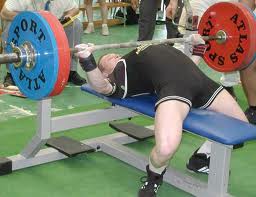
So an easy way to apply this in the gym while mixing it up is to simply try to accelerate the same weight you have previously been using – but faster. If you normally take two seconds to lift an object, try to do it in half of the time. Your joints will take on more force even though you haven’t actually changed the mass in question. It is a very simple way to change things, but can really be effective.
Please feel free to like, comment and critique this post and let me know what else you would like to hear about. Until then, rethink exercise!
 Therapy and Exercise Refined