
Tagged: yoga
So You’re Injured – Now What?
Any active person has had it happen. You are doing whatever activity you enjoy and suddenly feel a bit of a pull, cramp, sharp pain or something not quite right. Hopefully you’re smart enough to stop what you are doing and not push through the pain to complete whatever you are doing, but maybe not.
Then the inflammatory feeling starts kicking in. Your tissue will feel full, there may be lingering low level pain or sometimes acute high level pain when you move. Sometimes you can’t move without your body telling you not to through a jolt of pain. Often this is a bit indicator of the severity of whatever injury has happened.
So you realize that this is beyond a simple pull, mild strain or simple fatigue. You’ve done something that may require intervention and some sort of attention. You’ve injured yourself.
First things first: if you have acute high level pain and can’t move a limb or joint please GO TO A HOSPITAL. You will wait a while because musculo-skeletal injuries aren’t triaged as a priority but at least you will likely get some imaging immediately. There may also be things going on underneath the surface you have no idea about so better safe than sorry.
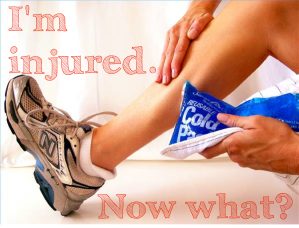
If that’s not the case, what is your next step. Well, there is a simple routine that you should follow, and it can be done in this order:
Care
This is what you do immediately. The biggest thing to do with any injury is STOP MOVING IT. Don’t stretch it right away, don’t think that you can “push through the pain”. You will make things worse. Stop what you’re doing. Your body is very intelligent and is already doing what it needs to in order to start fixing things. Give it a chance and don’t make things worse.
Don’t ignore pain. Pain is a signal saying “QUIT IT”. Your body is literally telling you to stop what you’re doing just like taking your hand off a hot stove. Once you have stopped moving, the next step is…
Evaluation
Some questions to ask yourself:
- Is the pain acute with movement or does it come and go, for example it stiffens up during sleep or is painful at different times of day?
- Is my strength compromised for certain movements, ie can I not pick something up, reach over my head or extend my leg without a problem?
- Is there soft tissue damage? Swelling is one thing, but bruising typically means a much more severe trauma that requires attention faster.
The more you have information, the easier the next step will be because you can figure out which practitioner to see first and not waste your time. Have a soft tissue problem? Massage might be best? A serious joint issue? Maybe an osteopath or chiropractor (more on this later in the article). Arming yourself with answers and figuring things out on your own can be valuable in not wasting your time. That leads us to…
Diagnosis
This does NOT mean going to someone like me and asking them what it is, because I have no authority to diagnose anything even with my years of experience. What is does mean is going to someone with the words Doctor in front of their name and ideally getting some testing and/or imaging. I always tell my clients to push for imaging because ultrasound and x-ray can reveal things simple testing cannot. If MRIs were more easily accessible that would be my default for many things. For those of you in Canada, remember that some provinces (ie Quebec for those of us in Ottawa) do allow paid MRI’s – you just have to pay for it.
As much as I appreciate the access to General Practitioners or walk in clinics, regular MD’s have little to no experience with bone and joint injuries and often will suggest exactly what I just said anyway, so don’t waste your time. And if a GP does give you a “maybe it’s this” diagnosis please get it confirmed by someone with experience and ideally imaging as I said.
Be proactive – once you have a diagnosis, learn everything about it that you can. It will not only educate you on what the injury is, hopefully it will make you realize WHY it happened and how to prevent it in the future. Often during my initial consultation I have found that clients have never had their injury properly explained to them by anyone and have no idea what happened to them and why. Knowing the why is very important for any recovery model. And that allows me to discuss…

Recovery
After you have a diagnosis, depending where you get it the first suggestion is always physiotherapy. It’s covered under benefits, didn’t you know? The only problem is that there are lots of other ways to treat an injury and in my experience physio yields the worst results overall for my clients and others I have spoken to. If I was going to suggest the order you should look into things and why, here’s my list. Again, not to knock any practitioners – there are lots of good and bad ones out there – this is simply my experience in dealing with all of them frequently.
#1: Osteopath. These people frequently have had experience in another modality and decided to move into osteopathy. From an assessment and treatment perspective the results from these practitioners seems to be consistent, and they don’t ask to see patients frequently.
#2: Massage Therapist. With the disclaimer that this is for soft tissue injuries only, a good massage therapist can help with things like scar tissue, blood flow to improve tissue and relieving stiffness and immobility. This should be included with any recovery plan.
#3: Chiropractic – Again, with the disclaimer that this does NOT mean back cracking or neck cracking. A good chiropractor who knows other treatment protocols like ART or myofasical release, or even relieving nerve entrapment are usually your best bet.
The thing with chiropractors is that a lot of them are salespeople who try to lock you into long term treatment plans where you see them three times a week – please don’t fall for this and if it is suggested, find another practitioner. This generally doesn’t have any interest in your recovery, it has interest in your wallet and benefit plan. If you need to see a practitioner three times a week they need to justify it.
#4: Physiotherapy. Again, there are good physios out there. The problem is that in my experience they are few and far between. Look for someone who doesn’t use outdated methods, someone who will actually spend time with you individually (not hook you up to a machine and walk away or leave you with an assistant), and who will progress you session to session properly.
How long does it take for proper recovery? The general rule for serious soft tissue injuries is 6-12 weeks, more serious damage like tendons and ligaments can be up to 3-6 months. Anything requiring surgical intervention can be 6-12 months. This is not carved in stone, but it will give you some perspective in that you need to assume that this is a long term fix and not a temporary thing.
In my opinion surgery should always be a last resort. It is done when there is no other option for restoring tissue. Full tears, severe arthritis, and things like broken joints often carry this load and it is totally necessary. If you have the option, see how well you can get first without it and then see about surgery if all else fails. Realize that if you meet with a surgeon, they are going to likely push for an operation – that’s their job. You have options, consider them all wisely before making a decision that can affect your body for the rest of your life.
As a final note, the number one thing I see that causes injuries to recur is that the person rushed back into exercise and doesn’t do what they need to do to fully recover. This just makes things worse and more often than not will result in a worse injury down the road. Listen to your body and ease back into exercise. Sometimes my clients have to start off ridiculously easy and it drives them crazy, but it takes time for recovery and having a guided path is absolutely essential.
So you’re hurt – there are lots of options for you to pursue and the good news is an injury doesn’t have to be the end of the world. If I told you the laundry list of injuries I’ve had (including a disc herniation and multiple tears in various places) you would be surprised – but I can still move easily and lift heavy things without a problem. Be smart, apply things properly and keep moving forward.
If you liked this article feel free to SHARE it on Facebook and follow me on Twitter @strengthottawa. And of course if you have any questions you can contact me at any time via phone or email. Stay mobile!
One Big Benefit of Strength
This title is a bit of a misnomer, because there are probably about a hundred or more benefits to additional strength. That’s the reason I primarily focus on it within my practice. Over my many years of working with people and improving their situations after injuries and special conditions I’ve seen some pretty cool things. However, recently I was treated to not only one, but two big examples of improved quality of life and the ability to deal with situations physically.
About a year ago I wrote about the success that one of my clients Randi S had after recovering from severe SI Joint dysfunction to the point that we couldn’t even move her during her initial month of training. She progressed to the point where she was able to bike for 26 km in the mountains and achieved a big goal. You can read about it here.
Randi recently experienced more issues starting in February and had some neck and heel issues as well. After several months of hard work, and even some competent physio work on her as well we were able to get her back up to speed. For her trip this year, Randi not only biked the full 46km – on a mountain bike (not an upright) which would previously have been unheard of for her back, she did paddleboarding, and even some cave climbing into cramped spaces. Again, all of these things two years ago would have caused Randi enormous pain and put her into bed for a week. Today due to being stronger she can do activities that excite and motivate her. The following week she even tried a spin class and has found a great yoga class.

Randi paddleboarding – notice the forward flexion and rotation under force, which with an SI Joint issue is usually quite painful.
One of the great things about my job is when clients get to the point where they don’t need me any more except for advice and maintenance. It sounds counter-intuitive, but I do believe that once people can do what they want or need to then I’m just a guide after that.
Success Story Number Two comes from Chris J. Chris came to see me about a year and a half ago due to back trauma from a car accident. He had worked with another trainer and had physio and seen little progress beyond more irritation. With a combination of MAT and proper strength work his back has been great for a while. He has been able to work as a volunteer lifting heavy things and walking a ton without any issues.
About four weeks ago coming home from Bluesfest with his mother in the car, Chris had a car run a red light and hit the car broadside at 60 kilometers an hour.
Everyone was fine, thankfully to airbags. But the amazing thing to me was that not only was Chris okay, he walked away completely unscathed except for a headache. His back was basically unaffected with some minor stiffness. I’d like to think that because he had more strength in his trunk, hips and shoulders that the impact (and think about hitting another object at 60km/h) didn’t cause any severe trauma. We have taught his system to kick in when it is needed to provide support at a time when it receives stress or load, and that happened in spades when he hit another vehicle.
I was astounded and quite happy to see such an obvious result simply from strength work. Think about applications for people who fall, play sports or simply want to do high impact activities like motorcycle riding. Being stronger overall helps with many situations and conditions.
Over the years I’ve managed to have an excellent track record when it comes to helping people who have conditions they previously thought were unmanageable. If you know of anyone who needs help or even just has questions about an injury or special condition feel free to send them to http://www.srottawa.com or to email me at strengthrehabottawa@gmail.com. You can also follow me on Twitter @strengthottawa.
Recovery – The Red Headed Stepchild
This article is in no way intended to offend any red haired people. Just a quick disclaimer because hey, I’m Canadian and I don’t want to offend anyone.
When I talk to people about fitness it is usually about an overall picture of wellness. This includes strength training, cardiovascular work, mobility, stress reduction and of course nutrition. There is another component that frequently gets ignored, ostracized and sometimes even laughed at by some athletes even though it is usually one of the first thing I recommend to many people:
Recovery.
This means rest, of course. A lot of people don’t understand the concept. It also means other things though.
I tell my athletes all the time that the workout is one part, but how your body responds to the workout is another thing entirely. Your tissue starts adapting to whatever stress you have put it under immediately. Often, if the workout is quite intense even your CNS will have taken on quite a bit of stress and need time to adapt and recover. Muscles have micro traumas that need to repair, inflammation is generated and even organs like your heart can have taken a bit of a beating. The actual deep science is well explained here.
Does this mean you can’t train the same muscle or movement daily? Of course not. The body will adapt over time and if you are an experienced exerciser then it is easier to frequently subject the body to load and force and have it respond in a positive way. The body is a remarkably adaptive thing. However, if you want it to improve, then you have to give it a chance to get stronger and sometimes this means doing nothing at all.
The time it takes to sufficiently repair tissue varies according to a bunch of variables, but here are a couple of the criteria I use with clients to give them a checklist to see if they need more recovery:
Is it SORE? This doesn’t mean that you can’t work it again, but if your muscles obviously can’t control the movement or you have restrictions then it is probably a good idea to let them rest. I always suggest a long warm up process and see how things feel – if after this you still feel sore and tired then let it go.

Doing an easier workout can greatly enhance recovery.
Are you FORCING the workout? You may need a rest day if you feel like you can’t give 100% effort and you’re just driving yourself further into the ground. Instead of making things better often this will actually make things worse.
Can you CONTROL your movements adequately? This means you can use good form in a weightlifting movement, achieve proper cadence or turnover in an endurance workout, or maintain position if doing a static pose as if in yoga. Lack of control means either your nervous or muscular system can’t work as hard and likely needs more rest.
This also does not mean that recovery can’t be ACTIVE. My athletes often do a short recovery run or bike after their long workouts. This moves the tissue in question, puts extra blood flow through it and can actually speed the recovery process. Taking a day to focus exclusively on mobility and release work can also help this process, and if you’re planning on working out intensely I’d actually suggest that it is mandatory to have at least one day devoted to this process.
This can mean warming up the tissue that needs attention with light movement, then working on adding blood flow into the fluid. Massage is an excellent technique for this. Many people make the mistake of going too hard into their tissue with hard foam rolling and really hard stretching, which can often be counterproductive over time.

Strength and mobility does not disappear overnight or even after a few days. However, if you over train and cause an injury this can set you back for weeks. Think of it as a risk/reward scenario and that it simply isn’t worth the risk for a possible minor short term gain. Too many athletes force themselves back into exercise too soon without taking the proper care and making sure that things have properly healed.
Always remember that exercise should be a life long endeavor and you can’t force things to heal faster. Taking the time to recovery properly as part of your program means that you will be able to improve more frequently and make progress without any setbacks. This essential part of fitness should not be overlooked by any serious athlete.
If you want to know more about recovery or have any feedback feel free to contact me, comment or find me on Facebook and Twitter at @paradigmottawa. Also, please share this with any athlete you think might need help with the recovery side of things. Thanks for reading!
What Did You Accomplish This Year?
A pretty simple concept post this week for my readers. Often when I’m dealing with clients I find one of the most important things for them is to get them to think long term, ie set annual goals and stick to them consistently throughout a calendar year.
We also tend to not give ourselves enough credit. It’s so easy to think of what you haven’t got versus what you have. If you’re healthier, fitter and most important happier at the end of the year, you’ve really won most of the battle.
So if you’re reading this post, I want you to think back to January of 2015. You can even check your social media to see where you were at (one of the perks of it). People today simply don’t think long term and then don’t give themselves proper credit for things they have actually accomplished. One of my main goals in life (and hopefully yours too) is to always be pushing forward and trying to improve personally and professionally.
Here’s some examples from my own list, and I’ll also share some accomplishments I feel I had with some of my clients without naming any names.
- Managed to correct a woman’s misdiagnosed tennis elbow in about thirty minutes applying common sense.
- Allowed a client to bike in the mountains, which was a huge life goal for her after years of chronic pain and immobility.
- Allowed a woman who had chronic fibromyalgia to experience pain free days for the first time in eight years.
- Was able to successfully rehabilitate a tibial plateau fracture to the point where the client can now run, jump and play sports (something she was told she shouldn’t do ever again).
- Took a running client to a 13 minute marathon personal best.
- Dealt with a couple of very rare conditions (I won’t get into details here) but they have really allowed me to increase my level of care and knowledge.
- Have managed to get several people into the best shape of their lives at a fairly advanced age and dealing with chronic hip, back and neck issues.
On a personal level:
- Welcomed my second daughter into the world who is a busy little bug and now that she can move around gets into anything and everything. She’s going to be an athlete for sure.
- Began working on my first course and book, to be fleshed out and hopefully presented for the first time in 2016.
- My band has taken off and I’m much more comfortable behind the microphone by far – check out getoffmylawn.rocks if you want to check us out or book a show.
- Currently symptom free from my previous heart condition and hoping that remains the same.
- I weigh exactly the same as I did twenty years ago.

So when you look back on your year, give yourself a pat on the back for what you have accomplished, no matter how small and insignificant it might seem. Then sit down and put together some goals for next year.
Think back on what you have done to mold the future and what you want to be. The best way to do this is to set some really high standards and do your best to meet them. Even if you don’t, by the time the end of next year rolls around you might be really surprised at what you have done versus what you haven’t.
If you want to share any of your upcoming goals, I’d love to hear what they are! Feel free to spread this around on social media and maybe we can start a trend of goal planning. Until 2016, I am so grateful for all of my loyal readers, friends and clients and next year will just bring bigger and better things!
 Therapy and Exercise Refined