
Tagged: crossfit
Does Your Back Hurt? Part Two
Last time we discussed the origins of back pain and some quick fix solutions if you have issues in this area. For this article I want to get into a bit more detail on what you can do to be more aware of your back issues and some real solutions in terms of restoring mobility and keeping your muscles firing well.
First of all, most people will tell you that the reason you have back pain is because you have a weak “core”. What does that mean?
In simple terms this means that the muscles that support your spinal column, especially as it relates to your pelvis in the lumbar area, are weak and need strength. Most practitioners will have you start to work on things like spinal bracing movements, hip stretches and lower back strengthening. However, this brings me to my first point when it comes to back pain, and one of the most important principles:
You need to know what the source of the issue is!
Imagine a person with a weak ankle due to spraining it several times as a kid. This person stops being active and loses a lot of their ability to fire their leg and back muscles, and eventually every time they take a step their body is slightly tilted to take load off the ankle. This throws off the pelvis slightly each time, and this throws the lower back out of line and therefore causes the supporting muscles on one side to fire too much. If the ankle is the source of the issue, strengthening the muscles in the midsection will help, but it doesn’t ultimately fix the problem. It’s like taking an Advil for a headache.
So rule number one is get properly diagnosed. I don’t diagnose, I tell people what in my experience things are and (99% of the time I’m right), but it is always confirmed by another party preferably with doctor in front of their name after they get referred. Many practitioners will not look past the pain area – find one that will.
I’ve had clients come in with back pain that we have resolved by treating their shoulders. Or feet. Or even simply practicing walking properly. It can be that simple.
So what is the “core”? Well, the way I explain it to clients is that you want to stop thinking of “core” and start thinking of SPINE. More specifically you want to start thinking of how it relates to your pelvis (mostly) and also things like your rib cage and shoulder complex. There’s many more muscles involved than just your TVA, or just your lower back. In the deep abdominal area alone there are five layers mostly overlapping each other. And, when you move one joint, you affect every muscle that crosses over it – and your spinal column is made up of lots of joints. If you move your hip, you’re affecting your spine. If you move your shoulder, you’re affecting your chest, back and shoulder (and a bunch of other things). Take this into consideration when performing any type of mobility movement.
Before I get into how to strengthen these areas (which will be for Part 3), I want to instead address mobility. This is the ability to move these joints without strain or compromising the muscles that control them. Typically this requires movement without a ton of load or force behind it. One of the biggest pieces of advice I can give here is:
Respect your body and allow it to move (or not move) as it wants to – don’t force it.
One major flaw people make with mobility work is that they push their muscles too hard and create even more strain. Instead of thinking of it as stretching, I invite my clients to instead think of it as allowing their muscles to achieve a longer range of motion within the involved joints. This goes across both sides of the muscle, the long and the short. If you lengthen or shorten a muscle too much, it is weak in that position and will often fire in order to try to get out of that position – which defeats the whole purpose of lengthening one side while you shorten another.
For example, if you are in a typical hamstring stretch you are lengthening the back of the leg, but you are also shortening the front (allowable to a certain extent until your knee reaches terminal extension). Always move within a point of mild resistance – never pain.
With the lower spine, the usual culprits for lack of mobility are the hip complex (especially in the front of the body) and the spinal erectors. General ranges that are restricted are spinal extension, pelvic movement, hip rotation and extension and lateral flexion (ie side bending – but be careful here – I don’t side bend anyone until they are much better).
So here are the top 5 mobility movements I prescribe to pretty much everyone with back pain as a start. Remember that as with any exercise program, a mobility program also needs to be tailored to you specifically – don’t necessarily take this as gospel. It is a good start for most of the population. As with anything else, if it makes your body uncomfortable or causes pain – DON’T DO IT.
Number One: The McKenzie position.
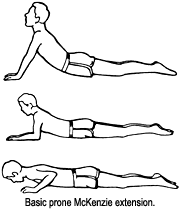
Use movement to start, but sparingly. Holding position for 5-8 minutes can be just as effective.
Stuart McGill, who is one of the most prominent back care specialists in the world advocates this as the number one movement, and I do as well. Place the hands under the shoulders and extend up, moving slowly until pressure is felt in the lower back and focus on dropping the hips into the ground. Repeat with movement but can also be done as a static hold if you have facet issues.
Number Two: Cat/Camel position
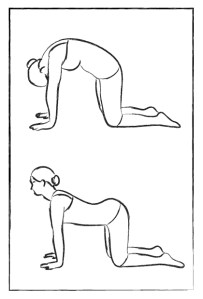
Focus on moving from the pelvis and pushing the tailbone up – repeat movement up and down.
This can also be a good transition into childs’ pose for upper back mobility. Focus on moving the entire spine starting from the tailbone, not just the upper back as many people tend to do.
Number Three: Kneeling Hip Flexor stretch with movement

Instead of holding static, raise up the same arm as the leg you have behind you and push the hip slightly forward and back, oscillating gently.
This movement may be difficult for those with knee problems. If you cannot get onto one leg a good modification is to do it standing up with one leg behind you. Oscillate the hip forward and back. Another fantastic stretch along this line is one popularized by Kelly Starrett – you can see it here but it is very advanced and should be modified for most people.
Number Four: Windshield wipers with feet on the ground

Move the knees side to side keeping the feet on the ground. I also have clients extend their arms to the sides in order to lengthen out the rib cage and pecs if they can.
For some people with advanced back problems this gets removed immediately because it can cause tilting. Also, if you have diagnosed SI Joint issues please take this one out until they are resolved. This puts rotational torque through the hips, which for many is a good thing but for some is not.
Number Five: Standing Glute/Piriformis stretch.

This can be done at work – just make sure that you don’t have any knee issues.
This movement can also be done lying down, but is more effective standing. Again as with the others, don’t hold position, lift and lower the knee until a pull is felt in the hip/glute area. If one side is tighter, do that side twice. For example, if your left is tighter you would go left, right then back to left.
This covers 85% of the bases for most people who have issues. Again, for some with severe mobility issues all of these might have to be modified. Feel free to comment or message me for modifications if you need them.
So the next question begs – how often? My recommendation is always twice a day to start, ideally morning about twenty minutes after rising so you have moved a bit and established blood flow, and then before bed or after work – whatever works for your schedule. It can be a great way to decompress at night and focus on yourself after turning off all of your electronics and is a great way to establish good sleep hygiene. Think of this as general maintenance and even just by doing these movements – within what your body will allow – you can experience some relief almost immediately if you have the beginnings of problems in your spine.
Oh, and if you tell me you don’t have time, this whole routine takes about 5-10 minutes. You have the time. You choose not to use it in the right way. Choose to help yourself.
In Part Three I will be going over exercise. Again, we often think about “core” work as something simple and straightforward but for most people finding out what area needs the most help is essential. This can allow us to build an exercise routine that will work for that individual and bring a solution to the issue. Like I said in Part One here, if you’re at Stage One then these should help a lot. Stage Two or Three might need some help. but you’re starting in the right place.
If you liked this please feel free to subscribe on my main page, comment and share on Facebook and on Twitter at @paradigmottawa. I look forward to any feedback you may have.
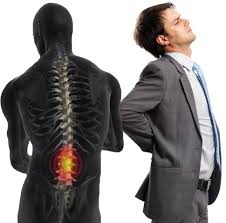
Does Your Back Hurt? Part One.
I’ve been in the physical fitness industry for over fifteen years and dealing with injuries and special conditions for most of that time. I’ve dealt with some of the most extreme cases you can think of and wanted to put together some comprehensive answers for people who need help figuring out how to help themselves with injuries.
Over the years the case I see most often is lower back pain. This can manifest itself in various different ways for different people. The typical stages of this type of injury are:
- General stiffness, usually upon waking up where it feels like you need to move around a bit in order to get blood moving again. This might also happen during the day at work or after driving in your car for a period of time. I call this Stage 1. Think of this as a check engine light coming on in your car.
- Constant stiffness and losing the ability to move quickly without a sudden jolt of pain. Often this is the stage where people start to seek help from some form of practitioner. There may be occasional sciatic pain down one leg or positions that cause discomfort, especially lying down. Sleeping may be difficult some nights. This is Stage 2. This is where you really need to start paying attention, although you really should have at Stage 1.
- Pain when moving. Typically this is sciatic referral pain (ie numbness or tingling down one leg or both) or sometimes SI Joint pain (beside the tailbone near the pelvis) and the whole joint area in the hip and lower back is stiff and sore constantly. Sometimes this can mean a disc herniation or bulge or an SI Joint displacement. This is Stage 3 and can render you unable to move properly at all, sit for periods of time and you will be in pain and likely have to resort to pain drugs to function.

This article is a series for letting you know why this pain happens, what you can do about it yourself without having to spend tons of money on physiotherapy, and how to prevent it in the future.
So to begin with, why does this pain happen?
Pain is a signal from your body telling you that something is either out of place or unable to support what it needs to. I wrote a previous article about pain and your body here if you would like to read about the concept of pain as a signal.
We spend hours each day in positions where our spine has to bend in ways that it is unsupported and doesn’t like to sit for periods of time. The most typical place for this is work – sitting in a desk chair hunched over a computer. As you sit forward, your lower spine and pelvis rotate and flex into the opposite position that they should be.

Basically when you’re standing your lower back has a curve (like it is supposed to), and when you sit it doesn’t – which puts pressure on and between the discs. It also means that some muscles have to work more to maintain the position and get tired, while others don’t do much work at all. Imagine at work you had two employees who did all the work, and two who showed up but never did anything. The two who did all the work would eventually get either burned out or pissed off. Muscles like to work together.
Stiffness is your body’s way of saying either “I don’t want to move” or “I can’t move well” – either way it isn’t a good thing. This can be muscular and can also be fascial restriction as well. It is a good idea to address both because without a very experienced imagining tech you’re not going to know for sure which one is the problem, and it is easy to address both issues.
What eventually happens when your joints and muscles tire and your fascia doesn’t allow movement is pain. Remember always that this is a warning signal and therefore should be looked at when it happens, not ignored like many of us tend to do.
So if I am starting to get these warning signs and have entered Stage 1 of the process, what should I do?
Awareness here is key. There are multiple avenues for relief at this stage, which is a good thing. In my next blog post I’m going to outline the best stretches and movements that you can use in order to bring relief to this area but for now let’s work on the immediate things.
However, in the meantime what you can do immediately is assess your position when doing things like sitting, moving around and even simply relaxing on the couch. Are you in a compromised spinal position? This means that something is usually twisted, flexed or positioned in a way that isn’t optimally aligned and eventually will cause a problem.
Example: recently I worked with an anesthesiologist who stood on the same side of his patients and bent and rotated to do his job – every day for hours. He didn’t realize that his spine was literally starting to twist into a new position. Bringing awareness to this and asking him to simply move to the other side of the table half the time brought him instant relief.
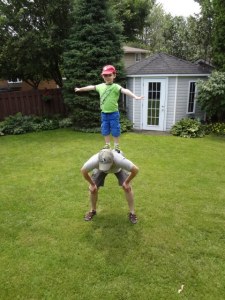
Dan couldn’t get out of bed without pain and within weeks could support his five year old on his bent back.
If you are a desk worker this can be as simple as moving your work station to a better position. It can also mean getting up frequently throughout the day and getting out of a bad position. I tell my clients to set a timer and stand up ideally at least every 30 minutes, and more often if they can. Walk in a circle or visit a colleague, do a lap around the floor or whatever you can do for a minute or two.
When standing, figure out if you’re always putting weight on one leg. Public transit riding is terrible for this. So is standing for long periods of time cooking, or doing any other type of work where you stand for periods of time. This shift onto one side creates a slight tilt in the pelvis and more load onto one hip, resulting in fatigue on one side. If you are, simply focus on shifting onto the other side once in a while.
If you’re driving long distances and have back pain when driving, try reclining your seat a bit more to open up your hip angle and decrease your lumbar spine flexion. It’s not a solution, but it can help with symptoms.
If necessary, even keep a log, writing down when you feel stiff. Is it after every day at work? Is it when you wake up or lie down? Is it after you have done three hours of gardening (which is probably normal)? Again, the awareness is important, especially if you want to figure out the source of the issue.
I’m always telling my clients to be more proactive and invest in their bodies. It really doesn’t take that much to be aware of when and why things are happening.
If you are already in Stage 2 or 3 then you need help. Go ahead and invest your time and consult a competent physiotherapist (sports therapists are generally best), chiropractor (ideally not a back cracker but a good ART specialist) or a good rehabilitative strength trainer (with credentials and education) like myself. Almost every day I help people reduce and eliminate back pain in a short period of time with simple solutions that you can perform on yourself with minimal time investment. However, you need to do the first steps first.
In my next article I’ll discuss the mechanics of back pain and your “core” and some simple movements and solutions to help you if you’re still experiencing problems. Feel free to like this article, subscribe to my site on the main page and follow me at @paradigmottawa on Twitter or Paradigm Personal Training on Facebook. And, of course if you have any questions I’m only an email away at paradigmfitnessottawa@gmail.com. See you next time!
What Did You Accomplish This Year?
A pretty simple concept post this week for my readers. Often when I’m dealing with clients I find one of the most important things for them is to get them to think long term, ie set annual goals and stick to them consistently throughout a calendar year.
We also tend to not give ourselves enough credit. It’s so easy to think of what you haven’t got versus what you have. If you’re healthier, fitter and most important happier at the end of the year, you’ve really won most of the battle.
So if you’re reading this post, I want you to think back to January of 2015. You can even check your social media to see where you were at (one of the perks of it). People today simply don’t think long term and then don’t give themselves proper credit for things they have actually accomplished. One of my main goals in life (and hopefully yours too) is to always be pushing forward and trying to improve personally and professionally.
Here’s some examples from my own list, and I’ll also share some accomplishments I feel I had with some of my clients without naming any names.
- Managed to correct a woman’s misdiagnosed tennis elbow in about thirty minutes applying common sense.
- Allowed a client to bike in the mountains, which was a huge life goal for her after years of chronic pain and immobility.
- Allowed a woman who had chronic fibromyalgia to experience pain free days for the first time in eight years.
- Was able to successfully rehabilitate a tibial plateau fracture to the point where the client can now run, jump and play sports (something she was told she shouldn’t do ever again).
- Took a running client to a 13 minute marathon personal best.
- Dealt with a couple of very rare conditions (I won’t get into details here) but they have really allowed me to increase my level of care and knowledge.
- Have managed to get several people into the best shape of their lives at a fairly advanced age and dealing with chronic hip, back and neck issues.
On a personal level:
- Welcomed my second daughter into the world who is a busy little bug and now that she can move around gets into anything and everything. She’s going to be an athlete for sure.
- Began working on my first course and book, to be fleshed out and hopefully presented for the first time in 2016.
- My band has taken off and I’m much more comfortable behind the microphone by far – check out getoffmylawn.rocks if you want to check us out or book a show.
- Currently symptom free from my previous heart condition and hoping that remains the same.
- I weigh exactly the same as I did twenty years ago.

So when you look back on your year, give yourself a pat on the back for what you have accomplished, no matter how small and insignificant it might seem. Then sit down and put together some goals for next year.
Think back on what you have done to mold the future and what you want to be. The best way to do this is to set some really high standards and do your best to meet them. Even if you don’t, by the time the end of next year rolls around you might be really surprised at what you have done versus what you haven’t.
If you want to share any of your upcoming goals, I’d love to hear what they are! Feel free to spread this around on social media and maybe we can start a trend of goal planning. Until 2016, I am so grateful for all of my loyal readers, friends and clients and next year will just bring bigger and better things!
How to Keep Resolutioners in the Gym
I know this might be a bit early, but in three weeks it is 2016 and a whole new set of people will be undertaking new fitness goals. The first thing I need to mention is that in the fitness world there tends to be a lot of elitism, and I’ve already seen the “resolutionist” memes going around Facebook. The fact we even have a nickname for new exercisers says it all.
With society the way it is and a massive obesity epidemic, we should all play our own part in not only helping these people get into fitness, but keeping them around as long as possible. See – you’ve already swallowed the pill of fitness, but you are in the vast minority. Over half the population doesn’t exercise at all, and only about 10% regularly (meaning 3x a week and sustained for over six months) because it just isn’t on their radar and never has been. But something is going to drive them into a gym (besides marketing hype) very soon. And for some reason many of them stop after a few weeks.
I want to keep them there. I want to have thousands of people NOT stop working out after six weeks and get healthier. Then hopefully some of those people can inspire others to get started, and snowball effect takes place and boom, no more obesity. Pipe dream? Maybe. But we can all do our part to help keep as many around as possible.
So here’s a list of ways as “fitness people” we can all help make sure that whomever you know who is getting started stays at it long term and gets to the state that you’re in: loving exercise and feeling a ton better.

STOP GIVING ADVICE AND GIVE SUPPORT INSTEAD
Your friend/co-worker/spouse knows you’re a fitness person. It’s probably obvious when you talk about what you did on the weekend or take off your jacket. Our instinct as soon as someone outside of our world wants to jump in is to tell them what worked for us, which simply may not be what would motivate or work for that person. Don’t tell them to start running five times a week for weight loss, or start deadlifting like you do. They are likely getting it from multiple sources and it can be not only confusing but overwhelming. People don’t change overnight.
The simplest thing is to say “awesome news!” and if they ask questions tell them what worked for you, but also let them know what you went through in order to arrive at that conclusion. Hopefully they will figure out something for themselves. If they went to the gym that morning, give them a high five and leave it at that. Let them know that it took you as a fitness person a long time to get to where you’re at and if they want to get support, you’re there but don’t overdo it.
And please don’t suddenly become a personal trainer and offer to work out with them and show them everything you do. Swallow your pride and tell them if they need it to hire a professional. You probably did too.
ASK WHAT THEIR ANNUAL GOAL IS
Typically the first few weeks as a new exerciser is confusing and tough. It is a new thing to fit into your schedule, you have no idea what you’re doing and are nervous every time you step into a facility. As a method of support, ask them where they want to be at the end of the YEAR. Not next month. Again, I’m trying to reinforce the long term aspect of this for sustainability.
Another way to motivate them might be “you know, I signed up for a Spartan Race in June – you should think about it” or “Hey, I’m thinking about doing the Army ½ marathon in September so I started training for the 10k in May”. Let them know how long it takes to achieve things. By next Christmas, where do they want to be? With any luck it will trigger the need to sustain what they are doing.
INTRODUCE THEM TO YOUR SUPPORT NETWORK
We all have one. Maybe you have a trainer you really like and have gotten great results from. Maybe you get amazing recipes from a web site you love. Maybe you subscribe to a message board you got a lot of support from. Maybe they could sub in on your winter ultimate team and see how much fun group sports can be. Introduce them to someone they see you talking to at the gym.
One of the hardest things any person can do is walk into a gym for the first time, and if they approach you and just need a friendly face, don’t get upset that they interrupted your third set of squats. Take a longer rest break and chat for a bit, even if you’re there to work hard. It won’t kill you or your gains.
SHOW THEM WHAT OPTIONS THERE ARE
Some people just aren’t gym people, and that’s fine. The world of health literally has unlimited options. I have a client whose husband is a World Champion in Skijoring, which is like sled dogging on a bicycle and sounds totally awesome (and I had never heard of it). Whether it’s pole dancing, skating, weightlifting or aquafit, the fact that people are moving at all is really great.
So maybe your person seems to feel like the gym isn’t for them. You probably have a friend who does something else cool that you can tell them about. Even as kids we all either played individual or team sports and that rarely changes as an adult. Ultimate Frisbee might not work, but then racquet sports might. Plus the challenge of learning something new is always fun.
PLAY NICE IN THE SANDBOX
This final one is for all of the people who complain about the “clutter” in the gym in January. Instead of thinking that “these people” are doing something wrong, change your attitude. Smile at them. Offer to let them work in on whatever you are using. If you see someone looking lost offer to help them. Be nice. Once, you were probably that person (I know I was).
Remember, these people are probably watching everything you are doing because you’re the fitness person and they want to get there. Being nice to newcomers can go a long way in getting them to stick around and feel like part of a community. CrossFit boxes are fantastic at this because they are usually totally inclusionary and that’s how they retain people. And those people make progress, at least far more than they would on the couch at home.
Sometimes a simple “hey, are you new here” and an offer to help can go a long way. Be nice.

If you liked this, please share it around and take it to heart. I’m not just writing this for fitness people, by the way. If you are thinking about stepping into a gym for the first time, please don’t be intimidated. There is a world of options out there and a lot of really good people and support for you.
My other advice is also don’t wait until January and just get started now, but that’s a whole other article.
Feel free to follow, share and like this and until next time make sure if you see someone in January you help them out!
 Therapy and Exercise Refined